![[Blog]](../../rw_common/images/baliza_logo_retina.png)
Gout and hyperuricemia: Is fish better suited than meat?
03/12/2026 OxiPur
Gout is a painful form of arthritis caused by elevated uric acid levels in the blood. Diet is an important factor in treating the condition and preventing gout attacks. One element of dietary therapy is to reduce purine intake by eating less meat or meat products. But what about fish? Is it a healthier alternative for people with gout? In this article, we take a closer look at the background and provide practical recommendations.
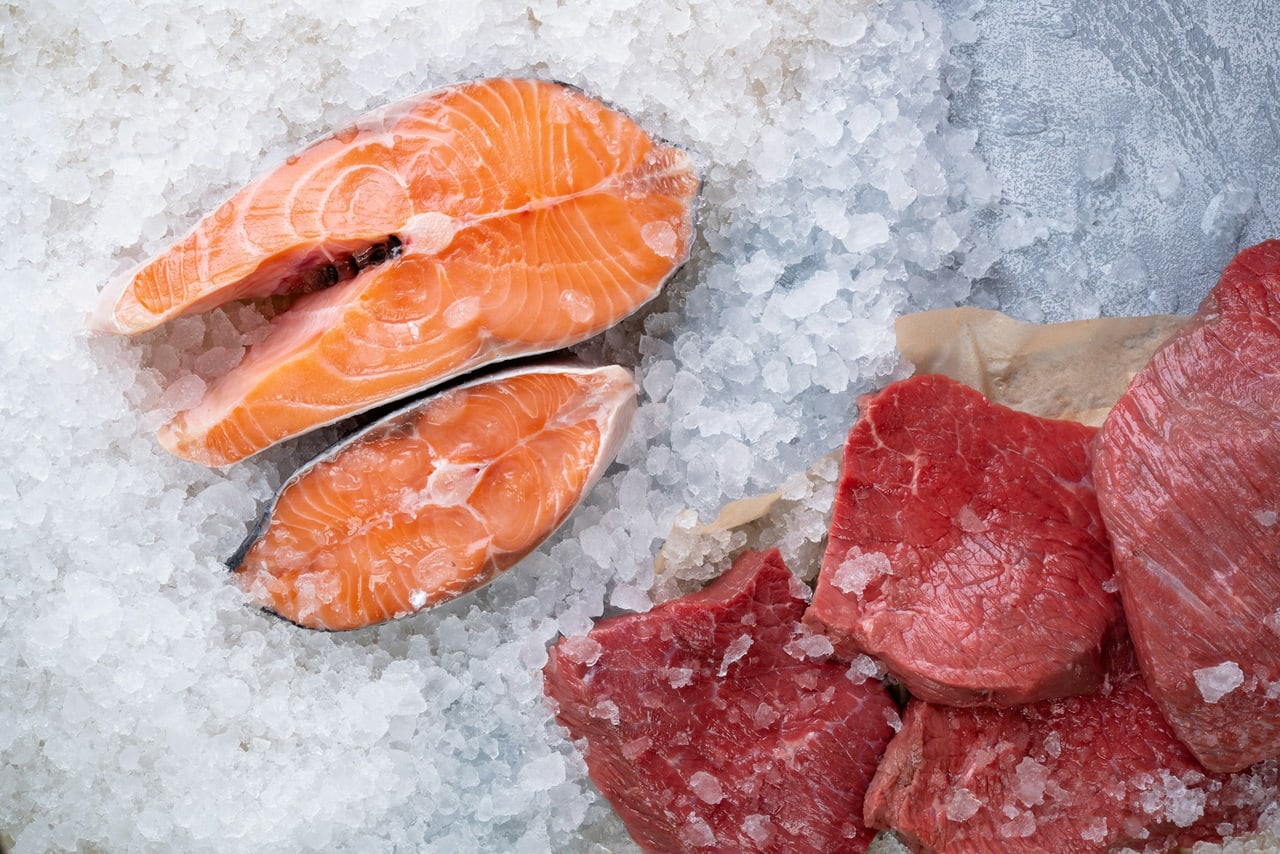
Gout develops when uric acid crystals deposit in the joints and cause inflammation. The causes that lead to uric acid building up in the body are very complex—genetic factors, for example, often play a role, and these are beyond your control.
Uric acid is produced mainly when purines, which occur naturally in the body, are broken down. However, purines can also be supplied from outside through food.
Even though dietary purines are not the main factor, it is possible to significantly lower the uric acid level in the blood through a low-purine diet. Foods particularly rich in purines include red meat and organ meats—but also fish, crustaceans, and seafood. From this perspective, it therefore doesn’t make sense to simply replace meat 1:1 with fish. Gout attacks can also be triggered by fish or seafood. Nevertheless, it’s worth taking a closer look, because fish and other marine animals have many nutritionally interesting properties.
One important difference between fish and meat is the content of omega-3 fatty acids. Fish, especially fatty varieties, contains many of these healthy fats, which have anti-inflammatory properties. In gout, however, inflammation in the joints is caused by mechanical irritation from crystallized uric acid, against which increased omega-3 intake can do little.
That’s why caution is advised with gout: while omega-3 fatty acids are generally beneficial to health, the omega-3-rich fish such as herring and mackerel contain particularly high amounts of purines. Therefore, the benefit for gout is rather limited.
A completely purine-free diet is not possible—and not even necessary. Almost all foods contain some amount of purines. However, you can reduce your purine intake through targeted dietary changes and thereby relieve the burden on the body. Important: both fish and meat contain purines, but in different amounts. The following overview serves as a guideline:
In addition to omega-3 fatty acids, fish is also a good source of high-quality protein and the essential trace element iodine. Because of these positive properties, it can make sense to occasionally eat fish or seafood even if you have gout.
However, this recommendation comes with certain restrictions: ideally, you would replace a meal with fatty red meat with a meal containing some lean fish, complemented by plenty of vegetables. Preparation also matters: greasy, breaded fish is significantly less recommended from a health perspective than gently prepared, steamed fish. Always make sure to stay below the maximum recommended daily amount of uric acid.
With the help of our OxiPur app, you can check the purine content of meat and fish types and ensure that you find a good compromise between protein content and purine content. Some particularly purine-rich fish varieties and especially organ meats, such as fish liver, are particularly critical and should definitely be avoided.
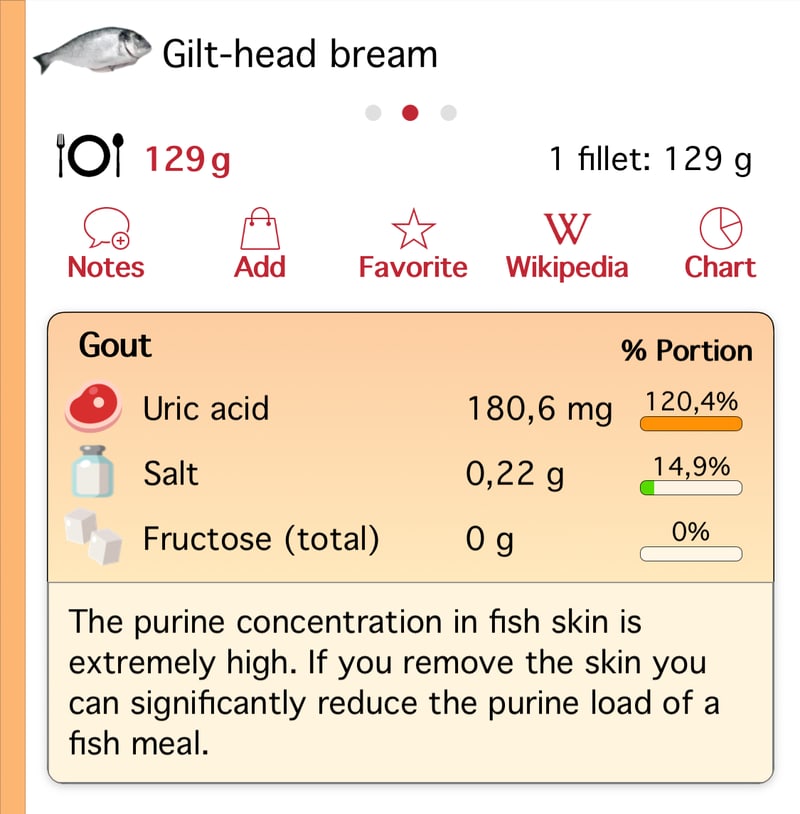 ▲ Figure 1: The OxiPur app helps assess your fish dish.
 Our OxiPur app provides you with reliable information that makes it easy to change your diet. Available in the App Store!

Share article
Back to blog
Sources:
T.-K. Yao et al., Advances in Gouty Arthritis Management: Integration of Established Therapies, Emerging Treatments, and Lifestyle Interventions, Int. J. Mol. Sci. 25:10853 (2024)
X. Qu et al., Determination of four different purines and their content change in seafood by high-performance liquid chromatography, Journal of the science of food and agriculture 97:2 (2017), 520–525
B. Jakše et al., Uric Acid and Plant-Based Nutrition, Nutrients 11:1736 (2019)
Z. Ren et al., The consumption of fish cooked by different methods was related to the risk of hyperuricemia in Japanese adults: A 3-year follow-up study, Nutr Metab Cardiovasc Dis 26:9 (2016), 778–785
Images:
Photo by David Foodphototasty on Unsplash
Photo by Mike on Unsplash
This article is for general information only and does not replace medical or nutritional advice.
What is gout and what role does diet play?
Gout develops when uric acid crystals deposit in the joints and cause inflammation. The causes that lead to uric acid building up in the body are very complex—genetic factors, for example, often play a role, and these are beyond your control.
Uric acid is produced mainly when purines, which occur naturally in the body, are broken down. However, purines can also be supplied from outside through food.
Even though dietary purines are not the main factor, it is possible to significantly lower the uric acid level in the blood through a low-purine diet. Foods particularly rich in purines include red meat and organ meats—but also fish, crustaceans, and seafood. From this perspective, it therefore doesn’t make sense to simply replace meat 1:1 with fish. Gout attacks can also be triggered by fish or seafood. Nevertheless, it’s worth taking a closer look, because fish and other marine animals have many nutritionally interesting properties.
Omega-3 fatty acids: an advantage of fish
One important difference between fish and meat is the content of omega-3 fatty acids. Fish, especially fatty varieties, contains many of these healthy fats, which have anti-inflammatory properties. In gout, however, inflammation in the joints is caused by mechanical irritation from crystallized uric acid, against which increased omega-3 intake can do little.
That’s why caution is advised with gout: while omega-3 fatty acids are generally beneficial to health, the omega-3-rich fish such as herring and mackerel contain particularly high amounts of purines. Therefore, the benefit for gout is rather limited.
Purine content: fish vs. meat
A completely purine-free diet is not possible—and not even necessary. Almost all foods contain some amount of purines. However, you can reduce your purine intake through targeted dietary changes and thereby relieve the burden on the body. Important: both fish and meat contain purines, but in different amounts. The following overview serves as a guideline:
Meat
- Organ meats (liver, kidneys) contain particularly high amounts of purines and are not recommended
- Red meat (beef, pork, lamb) has a high purine content and should be avoided with gout
- Poultry (chicken, turkey) has a lower purine content and can be eaten in moderation
Fish and seafood
- Fatty fish (herring, mackerel, sardines, anchovies) have a very high purine content and should be avoided
- Shellfish (shrimp, crab, mussels) also contain a lot of purines
- Lean fish (cod, plaice, pike-perch) have a moderate purine content and are acceptable in small amounts
Conclusion: should I choose fish or meat?
In addition to omega-3 fatty acids, fish is also a good source of high-quality protein and the essential trace element iodine. Because of these positive properties, it can make sense to occasionally eat fish or seafood even if you have gout.
However, this recommendation comes with certain restrictions: ideally, you would replace a meal with fatty red meat with a meal containing some lean fish, complemented by plenty of vegetables. Preparation also matters: greasy, breaded fish is significantly less recommended from a health perspective than gently prepared, steamed fish. Always make sure to stay below the maximum recommended daily amount of uric acid.
With the help of our OxiPur app, you can check the purine content of meat and fish types and ensure that you find a good compromise between protein content and purine content. Some particularly purine-rich fish varieties and especially organ meats, such as fish liver, are particularly critical and should definitely be avoided.
More practical recommendations
- Along with reducing purine intake, a broader dietary change is also advisable—especially incorporating fruits and vegetables into your meal plan. Many foods can have a beneficial effect on the condition by helping to excrete excess uric acid, preventing uric acid from crystallizing, or providing other health-promoting properties.
- It’s important to remember that effective gout therapy is not only about controlling purine content. In the OxiPur app, you’ll also find many other values—for example salt content, alcohol, or fructose—which must also be considered factors that can negatively affect uric acid levels in the blood.
- Changing your diet can be difficult at the beginning, because many outdated recommendations persist stubbornly. But with the support of our OxiPur app, you can overcome many initial hurdles and lay the foundation for a sustainable improvement in your health.
Our OxiPur app provides you with reliable information that makes it easy to change your diet. Available in the App Store!Share article
Back to blog
Sources:
T.-K. Yao et al., Advances in Gouty Arthritis Management: Integration of Established Therapies, Emerging Treatments, and Lifestyle Interventions, Int. J. Mol. Sci. 25:10853 (2024)
X. Qu et al., Determination of four different purines and their content change in seafood by high-performance liquid chromatography, Journal of the science of food and agriculture 97:2 (2017), 520–525
B. Jakše et al., Uric Acid and Plant-Based Nutrition, Nutrients 11:1736 (2019)
Z. Ren et al., The consumption of fish cooked by different methods was related to the risk of hyperuricemia in Japanese adults: A 3-year follow-up study, Nutr Metab Cardiovasc Dis 26:9 (2016), 778–785
Images:
Photo by David Foodphototasty on Unsplash
Photo by Mike on Unsplash
This article is for general information only and does not replace medical or nutritional advice.