![[Blog]](../../rw_common/images/baliza_logo_retina.png)
Strawberries and Histamine Intolerance: Safe to Eat or Not?
06/18/2026 Food Intolerances
Strawberries are one of the most popular types of fruit. Depending on climate, strawberry season typically begins in late April and usually ends in late July or early August. During that time you'll find them everywhere — as fresh fruit and in ice cream, cake, smoothies, or jam.
But not everyone can eat them without a second thought. Strawberries appear on nearly every "foods to avoid" list for histamine intolerance — they even feature in our app icon. Yet they are not a histamine-rich food in the classic sense like red wine or aged cheese; on the contrary, they contain no histamine at all! Despite this, a striking number of people report symptoms that often appear just minutes after eating them.
This article explains what lies behind these reactions and what you should keep in mind.
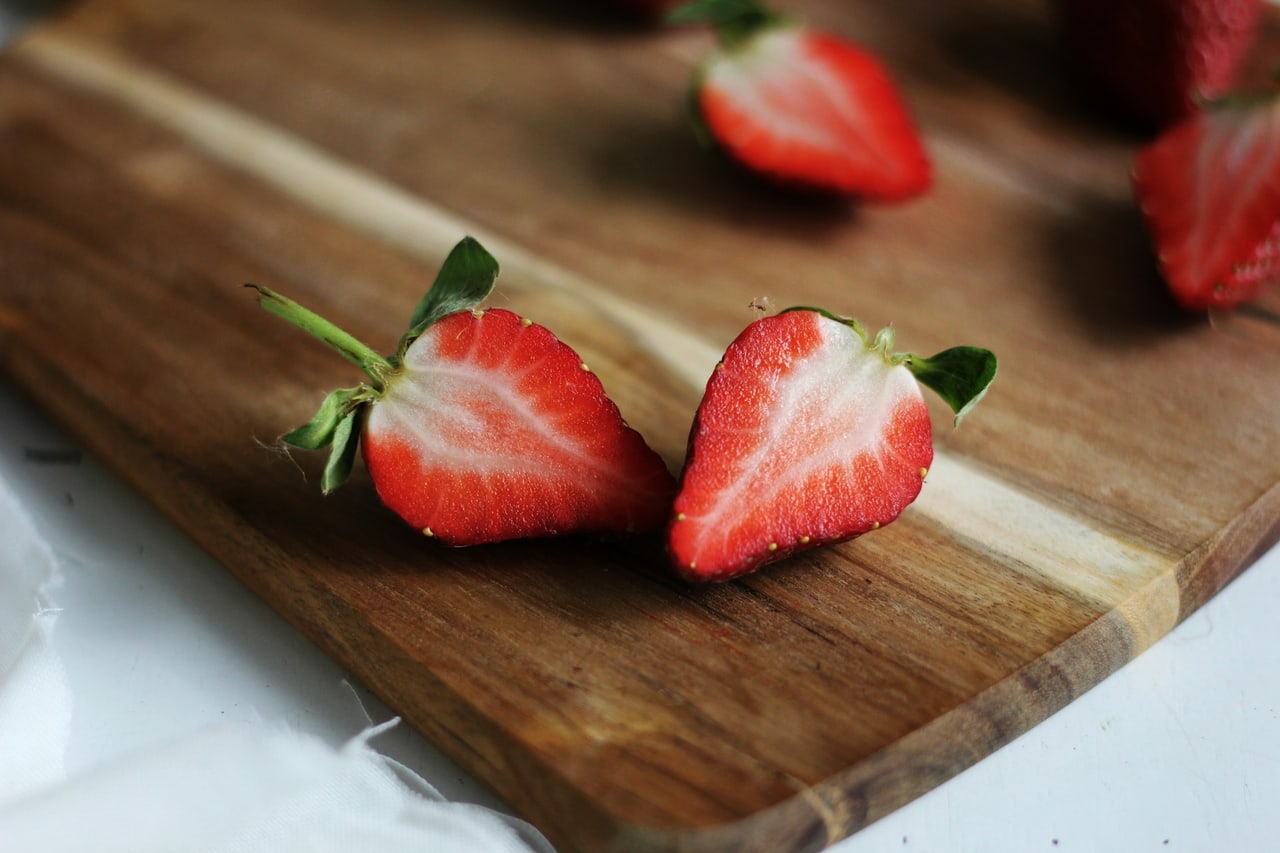
Before we look at why strawberries are so often poorly tolerated, let's first consider why they are so healthy. Around 40 different phenolic compounds have been identified in strawberries, including kaempferol, quercetin glycosides, cyanidin, pelargonidin, ellagic acid, and ellagitannins. The unique interplay of these so-called secondary plant compounds is considered the basis for the fruit's antioxidant and anti-inflammatory properties — and in human intervention studies, strawberries have been associated with beneficial effects on inflammatory markers, cardiovascular health, and cognitive function.
Particularly interesting is pelargonidin, the main red anthocyanin of the strawberry, which has a strong anti-inflammatory effect.
Despite their healthy compounds, strawberries are often suspected of triggering intolerances. The symptoms that can occur after eating strawberries are highly variable. Common complaints include:
Histamine intolerance is characterized primarily by a reaction to foods high in histamine. Strawberries, however, contain no histamine.
Strawberries are considered histamine liberators. This means they can prompt the body's own immune cells (such as mast cells) to release the histamine stored within them — without the involvement of IgE antibodies, as would be the case in true allergies. In the vast majority of cases, then, this is not an allergy but a non-allergic mechanism — also referred to as a "pseudoallergy."
However, the underlying mechanism has not been clearly established scientifically to this day. It is currently suspected that the symptoms following strawberry consumption are caused by certain substances in the fruit — histamine-like biogenic amines, salicylates, or other compounds are among the suspects.
There is also discussion of an individually heightened sensitivity which then — possibly in combination with a reduced ability to break down ingested or released histamine in the body — leads to an intolerance reaction.
Histamine intolerance is highly individual, especially when it comes to liberators. For many of those affected, the principle of the tolerance threshold applies: small amounts may be tolerated, while larger amounts exceed one's personal limit.
A few practical considerations if you want to try strawberries carefully:
Less is more. Instead of a whole bowl, perhaps try two or three strawberries and observe how your body reacts. If reactions occur even with very few berries, it's better to avoid them.
Avoid combinations. On a day when you eat strawberries, it's better to skip other histamine liberators: no red wine, no tomatoes, no citrus fruits, no aged cheese.
If strawberries really don't agree with you: there are summer fruits that many people with histamine intolerance tolerate better, including blueberries or blackberries (in moderate amounts). With the help of our app, you can quickly find suitable types of fruit and, if needed, also check how well they are tolerated alongside other intolerances (such as fructose intolerance).
For many people with histamine intolerance, strawberries are a problematic food. Why this is the case is still not fully understood today. The decisive factors are the amount and also the combination with other potentially histamine-containing meals. If histamine is released in the body after eating strawberries, the histamine metabolism could be overwhelmed by additional histamine from other foods.
 Our price-winning "Food Intolerances" app helps you manage your diet. Available for iOS and Android. Check it out:


Share article
Back to blog
Sources:
F. Giampieri et al., The strawberry: Composition, nutritional quality, and impact on human health – Nutrition 28:1 (2012), 9–19
S. M. Hannum, Potential impact of strawberries on human health – Critical Reviews in Food Science and Nutrition 44:1 (2004), 1–17
S. Afrin et al., Promising Health Benefits of the Strawberry: A Focus on Clinical Studies – Journal of Agricultural and Food Chemistry 64:22 (2016),4435–4449
M. Kent, Food and Fitness: A Dictionary of Diet and Exercise, Oxford University Press Ausgabe 2, 2016
N. Eriksson et al., Self-Reported Food Hypersensitivity in Sweden, Denmark, Estonia, Lithuania, and Russia, J Invest Allergol Clin Immunol 14:1 (2004), 70–79
B. Wüthrich, The Atopy Syndrome in the Third Millenium, Curr Probl Dermatol vol 28 (1999), 64–73, Basel, Karger
Image:
Foto by Angèle Kamp on Unsplash
This article is for general information only and does not replace medical or nutritional advice.
But not everyone can eat them without a second thought. Strawberries appear on nearly every "foods to avoid" list for histamine intolerance — they even feature in our app icon. Yet they are not a histamine-rich food in the classic sense like red wine or aged cheese; on the contrary, they contain no histamine at all! Despite this, a striking number of people report symptoms that often appear just minutes after eating them.
This article explains what lies behind these reactions and what you should keep in mind.
How Healthy Are Strawberries? The Red Fruit Is Packed With Valuable Compounds
Before we look at why strawberries are so often poorly tolerated, let's first consider why they are so healthy. Around 40 different phenolic compounds have been identified in strawberries, including kaempferol, quercetin glycosides, cyanidin, pelargonidin, ellagic acid, and ellagitannins. The unique interplay of these so-called secondary plant compounds is considered the basis for the fruit's antioxidant and anti-inflammatory properties — and in human intervention studies, strawberries have been associated with beneficial effects on inflammatory markers, cardiovascular health, and cognitive function.
Particularly interesting is pelargonidin, the main red anthocyanin of the strawberry, which has a strong anti-inflammatory effect.
What Symptoms Can Occur After Eating Strawberries?
Despite their healthy compounds, strawberries are often suspected of triggering intolerances. The symptoms that can occur after eating strawberries are highly variable. Common complaints include:
- Tingling or burning on the lips and in the mouth
- Skin rash, hives, or redness
- Headaches or migraines
- Digestive problems such as abdominal cramps or bloating
- A blocked or runny nose
- In rare cases: a racing heartbeat or general malaise
Why Do Strawberries Cause Symptoms in People With Histamine Intolerance?
Histamine intolerance is characterized primarily by a reaction to foods high in histamine. Strawberries, however, contain no histamine.
Strawberries are considered histamine liberators. This means they can prompt the body's own immune cells (such as mast cells) to release the histamine stored within them — without the involvement of IgE antibodies, as would be the case in true allergies. In the vast majority of cases, then, this is not an allergy but a non-allergic mechanism — also referred to as a "pseudoallergy."
However, the underlying mechanism has not been clearly established scientifically to this day. It is currently suspected that the symptoms following strawberry consumption are caused by certain substances in the fruit — histamine-like biogenic amines, salicylates, or other compounds are among the suspects.
There is also discussion of an individually heightened sensitivity which then — possibly in combination with a reduced ability to break down ingested or released histamine in the body — leads to an intolerance reaction.
A note on the state of research: The precise molecular mechanisms behind the histamine-releasing effect of strawberries have not been fully clarified scientifically. Many findings stem mainly from observations in everyday clinical practice and from observational studies, rather than from controlled intervention trials. Despite this, strawberries are consistently classified as a histamine liberator.
Do I Have to Avoid Strawberries Completely With Histamine Intolerance?
Histamine intolerance is highly individual, especially when it comes to liberators. For many of those affected, the principle of the tolerance threshold applies: small amounts may be tolerated, while larger amounts exceed one's personal limit.
A few practical considerations if you want to try strawberries carefully:
Less is more. Instead of a whole bowl, perhaps try two or three strawberries and observe how your body reacts. If reactions occur even with very few berries, it's better to avoid them.
Avoid combinations. On a day when you eat strawberries, it's better to skip other histamine liberators: no red wine, no tomatoes, no citrus fruits, no aged cheese.
Which Fruits Are Better Tolerated With Histamine Intolerance?
If strawberries really don't agree with you: there are summer fruits that many people with histamine intolerance tolerate better, including blueberries or blackberries (in moderate amounts). With the help of our app, you can quickly find suitable types of fruit and, if needed, also check how well they are tolerated alongside other intolerances (such as fructose intolerance).
Conclusion: Strawberries and Histamine Intolerance
For many people with histamine intolerance, strawberries are a problematic food. Why this is the case is still not fully understood today. The decisive factors are the amount and also the combination with other potentially histamine-containing meals. If histamine is released in the body after eating strawberries, the histamine metabolism could be overwhelmed by additional histamine from other foods.
Our price-winning "Food Intolerances" app helps you manage your diet. Available for iOS and Android. Check it out:Share article
Back to blog
Sources:
F. Giampieri et al., The strawberry: Composition, nutritional quality, and impact on human health – Nutrition 28:1 (2012), 9–19
S. M. Hannum, Potential impact of strawberries on human health – Critical Reviews in Food Science and Nutrition 44:1 (2004), 1–17
S. Afrin et al., Promising Health Benefits of the Strawberry: A Focus on Clinical Studies – Journal of Agricultural and Food Chemistry 64:22 (2016),4435–4449
M. Kent, Food and Fitness: A Dictionary of Diet and Exercise, Oxford University Press Ausgabe 2, 2016
N. Eriksson et al., Self-Reported Food Hypersensitivity in Sweden, Denmark, Estonia, Lithuania, and Russia, J Invest Allergol Clin Immunol 14:1 (2004), 70–79
B. Wüthrich, The Atopy Syndrome in the Third Millenium, Curr Probl Dermatol vol 28 (1999), 64–73, Basel, Karger
Image:
Foto by Angèle Kamp on Unsplash
This article is for general information only and does not replace medical or nutritional advice.